Learn how to build a socially conscious investment portfolio and invest in your beliefs.

Many investors are looking to build a portfolio that reflects their socially responsible values while giving them the potential for solid returns. That’s where SRI Investing, Impact Investing, and ESG Investing may play a role.
In the past, some investors regarded these investment strategies as too restrictive. But over time, improved evaluative data and competitive returns made these strategies more mainstream. Even though SRI, ESG investing, and Impact Investing share many similarities, they differ in some fundamental ways. Read on to learn more.1

ESG (Environmental, Social, and Governance) Investing

ESG Investing stands for environmental, social, and governance investing. The model assesses investments based on specific criteria, such as ethical business practices, environmental conservation, and local community impact. The popularity of ESG investing has grown: in the United States alone, there are more than 500 ESG mutual funds and exchange-traded funds (ETFs) available. Just a decade ago, there were only 100 ESG funds.2,3,4,5

SRI (Socially Responsible Investing)

SRI uses criteria from ESG investing to actively eliminate or select investments according to ethical guidelines. SRI investors may use ESG factors to apply negative or positive screens when choosing how to build their portfolio. For example, an investor may wish to allocate a portion of their portfolio to companies that contribute to charitable causes. In the U.S., more than $17 trillion are currently invested according to SRI strategies. This is an increase from the $12 trillion invested in SRIs by the end of 2017.4,5,6

Impact Investing

Also known as thematic investing, impact investing differs from the two above. The main goal of impact investing is to secure a positive outcome regardless of profit. For example, an impact investor may use ESG criteria to find and invest in a company dedicated to the development of a cure for cancer no matter the outcome of that investment.1

The biggest takeaway? There are plenty of choices to keep your investments aligned with your personal beliefs. No matter how you decide to structure your investments, don’t forget it’s always a smart move to speak with your financial professional before making a major change.

1. Investopedia.com, 2022
2. Investing in mutual funds is subject to risk and potential loss of principal. There is no assurance or certainty that any investment or strategy will be successful in meeting its objectives. Investors should consider the investment objectives, risks, charges, and expenses of the fund carefully before investing. The prospectus contains this and other information about the funds. Contact the fund company directly or your financial professional to obtain a prospectus, which should be read carefully before investing or sending money.
3. Exchange-Traded Funds (ETFs) are subject to market and the risks of their underlying securities. Some ETFs may involve international risks, which include differences in financial reporting standards, currency exchange rates, political risk unique to a specific country, foreign taxes and regulations, and the potential for illiquid markets. These factors may result in greater share price volatility. ETFs that focus on a small universe of securities may be subject to more market volatility as well as the specific risks that accompany the sector, region, or group. An ETF’s trading price may be at a premium or discount to the net asset value of the underlying securities.
4. Morningstar.com, 2022
5. USSIF.org, 2022
6. Asset allocation is an approach to help manage investment risk. Asset allocation does not guarantee against investment loss.
The content is developed from sources believed to be providing accurate information. The information in this material is not intended as tax or legal advice. It may not be used for the purpose of avoiding any federal tax penalties. Please consult legal or tax professionals for specific information regarding your individual situation. This material was developed and produced by FMG Suite to provide information on a topic that may be of interest. FMG Suite is not affiliated with the named broker-dealer, state- or SEC-registered investment advisory firm. The opinions expressed and material provided are for general information, and should not be considered a solicitation for the purchase or sale of any security. Copyright FMG Suite.

Lifestyle considerations in creating your retirement portfolio.

Most portfolios are constructed based on an individual’s investment objective, risk tolerance, and time horizon.

Using these inputs and sophisticated portfolio-optimization calculations, most investors can feel confident that they own a well-diversified portfolio, appropriately positioned to pursue their long-term goals.1
However, as a retiree, how you choose to live in retirement may be an additional factor to consider when building your portfolio.

Starting a Business?

Using retirement funds to start a business entails significant risk. If you choose this path, you may want to consider reducing the risk level of your investment portfolio to help compensate for the risk you’re assuming with a new business venture.

Since a new business is unlikely to generate income right away, you may want to construct your portfolio with an income orientation in order to provide you with current income until the business can begin turning a profit.

Traveling for Extended Periods of Time?

There are a number of good reasons to consider using a professional money manager for your retirement savings. Add a new one. If you are considering extended travel that may keep you disconnected from current events (even modern communication), investing in a portfolio of individual securities that requires constant attention may not be an ideal approach. For this lifestyle, professional management may suit your retirement best.2

Rethink Retirement Income?

Market volatility can undermine your retirement-income strategy. While it may come at the expense of some opportunity cost, there are products and strategies that may protect you from drawing down on savings when your portfolio’s value is falling—a major cause of failed income approaches.

1. Diversification and portfolio optimization calculations are approaches to help manage investment risk. They do not eliminate the risk of loss if security prices decline.
2. Keep in mind that the return and principal value of security prices will fluctuate as market conditions change. And securities, when sold, may be worth more or less than their original cost. Past performance does not guarantee future results. Individuals cannot invest directly in an index.
The content is developed from sources believed to be providing accurate information. The information in this material is not intended as tax or legal advice. It may not be used for the purpose of avoiding any federal tax penalties. Please consult legal or tax professionals for specific information regarding your individual situation. This material was developed and produced by FMG Suite to provide information on a topic that may be of interest. FMG, LLC, is not affiliated with the named broker-dealer, state- or SEC-registered investment advisory firm. The opinions expressed and material provided are for general information, and should not be considered a solicitation for the purchase or sale of any security. Copyright FMG Suite.

Looking forward to retirement? It’s critical to understand the difference between immediate and deferred annuities.

Despite not being as well known as some other retirement tools, annuities account for 6% of all assets earmarked for retirement. With about $2.6 trillion in assets, annuities hold more funds than Roth IRAs.1

An annuity is a contract with an insurance company. In exchange for a premium or a series of premiums, the insurance company agrees to make regular payments to the contract holder. The funds held in an annuity contract accumulate tax deferred.

For individuals interested in accumulating retirement assets, annuities can be attractive because they are not subject to contribution limits, unlike most other tax-deferred vehicles. In other words, retirement-minded individuals can set aside as much money as they would like into an annuity.

Two Phases

Annuity contracts pass through two distinct phases: accumulation and payout. During the accumulation phase, the funds accumulate until the annuity contract reaches its payout date. At that time, the total will either be paid out as a lump sum or as a series of payments over a period that can stretch as long as the account holder’s life.

The funds attributed to the initial premium will not be taxed, but any earnings on those funds will be taxed as regular income.

Immediate Annuity

As its name implies, an immediate annuity is structured to provide current income. After paying the initial premium, an individual receives regular income, which can be deferred up to twelve months. The funds remaining in the contract accumulate on a tax-deferred basis. And only that portion of each payment attributable to interest is subject to taxes; the rest is treated as a return of principal.

This article is for informational purposes only and is not a replacement for real-life advice, so make sure to consult your tax, legal, and accounting professionals before modifying your tax strategy.

Deferred Annuity

It is also possible to purchase an annuity contract that defers payout until a specific date in the future. The premiums you pay to a deferred annuity accumulate and earn interest during the accumulation phase. The annuity holder determines the amount of payments and when the payouts begin, which is usually in retirement. With a deferred annuity, the earnings credited to your contract are taxed when they are withdrawn.

Annuities have contract limitations, fees, and charges, including account and administrative fees, underlying investment management fees, mortality and expense fees, and charges for optional benefits. Most annuities have surrender fees that are usually highest if you take out the money in the initial years of the annuity contract. Withdrawals and income payments are taxed as ordinary income. If a withdrawal is made prior to age 59½, a 10% federal income tax penalty may apply (unless an exception applies). The guarantees of an annuity contract depend on the issuing company’s claims-paying ability. Annuities are not guaranteed by the FDIC or any other government agency.

Variable annuities are sold by prospectus, which contains detailed information about investment objectives and risks, as well as charges and expenses. You are encouraged to read the prospectus carefully before you invest or send money to buy a variable annuity contract. The prospectus is available from the insurance company or from your financial professional. Variable annuity subaccounts will fluctuate in value based on market conditions and may be worth more or less than the original amount invested if the annuity is surrendered.

For retirement-minded investors, annuities have some attractive features that may be worth exploring. Annuities also have certain limitations and expenses that need to be considered before committing to a contract.

  1. ICI.org, 2022

The content is developed from sources believed to be providing accurate information. The information in this material is not intended as tax or legal advice. It may not be used for the purpose of avoiding any federal tax penalties. Please consult legal or tax professionals for specific information regarding your individual situation. This material was developed and produced by FMG Suite to provide information on a topic that may be of interest. FMG Suite is not affiliated with the named broker-dealer, state- or SEC-registered investment advisory firm. The opinions expressed and material provided are for general information, and should not be considered a solicitation for the purchase or sale of any security. Copyright FMG Suite.

Reaching six figures is no easy feat. If you’re one of the hard-working few who have made it to this milestone, give yourself a pat on the back and celebrate. It can be tempting to feel like now that you’ve made it to the top of this mountain your financial worries are over. But before you go reaching for a bottle of champagne or calling a Ferrari dealer, consider this: the majority of Americans living paycheck to paycheck are from higher income households. In fact, out of 9 million Americans surveyed, 8 million of those are in higher income brackets.1

Now it’s more important than ever to take an active role in managing your money. Don’t equate earning six-figures with the ability to spend six-figures. Fortunately, there are several strategies that may help:

Steps to Take

There is no one-size-fits-all strategy for maximizing your new six-figure income. Every person is different, and some suggestions may mean more to you than others. But there are tried-and-true methods that can help point you in the right direction when it comes to your financial health.

Review Your Budget

Now that you are making six figures, you may be tempted to never look at your budget again. Resist this temptation and go back over your budget to make sure your spending is based on your overall approach. Feel free to adjust your line items to match any new priorities without going overboard. Careful preparation may help you know how much you can consider spending on that splurge item that you found online. Your renewed budget should be designed to follow your other new goals, knowing that your day-to-day matters are on firm footing.2

Target Unproductive Debt

Not all debt is bad, as much of it helps you both financially and in terms of your quality of life. But certain types of debt, like credit cards and personal loans, may be something you want to manage better. Set a goal for your unproductive debt, which may put you in a better overall financial position. Each penny you save can go toward other goals, such as vacations, travel or even retirement.

Build Your Emergency Fund

Life is full of the unexpected. Prepare by setting aside enough liquid money to cover three to six months of expenses. This reserve may help you manage through a job loss or an injury or illness that requires time to heal.

Don’t Forget About Taxes

Now that you’ve entered a new income bracket, your tax obligations may have changed. Take time to review your tax situation in an effort to avoid year-end surprises. This article is for informational purposes only and is not a replacement for real-life advice, so be sure to consult a tax, accounting, or human resource professional before modifying your tax-withholding strategy.

Don’t Forget Your Retirement Plans

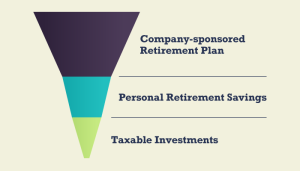
If you haven’t started planning for retirement, your new income level may allow you to start setting aside money using a company-sponsored retirement plan. Initially, a financial professional may be able to provide guidance concerning the role a retirement plan can play in your overall financial strategy.

Move Forward Confidently

Restructuring your budget, managing debt, creating an emergency fund, and beginning to consider retirement may help ensure a more comfortable financial future. Even at a six-figure income, proactive preparations can help position you such that your money will eventually work for you.

1. Pymnts.com, January 2023
2. Forbes.com, March 29, 2022

The content is developed from sources believed to be providing accurate information. The information in this material is not intended as tax or legal advice. It may not be used for the purpose of avoiding any federal tax penalties. Please consult legal or tax professionals for specific information regarding your individual situation. This material was developed and produced by FMG Suite to provide information on a topic that may be of interest. FMG, LLC, is not affiliated with the named broker-dealer, state- or SEC-registered investment advisory firm. The opinions expressed and material provided are for general information, and should not be considered a solicitation for the purchase or sale of any security. Copyright FMG Suite.

What has upswings and downturns, troughs, peaks, and plateaus? Though such terms could easily describe a roller coaster ride, they are also commonly used to describe the business cycle.

The business cycle – also known as the economic cycle – refers to fluctuations in economic activity over several months or years. Tracking the cycle helps professionals forecast the direction of the economy. The National Bureau of Economic Research makes official declarations about the economic cycle based on specific factors, including the growth of the gross domestic product, household income, and employment rates.

Recovery & Recession

Business

An upswing, or recovery, occurs when the economic indicators improve over time. A recession occurs when the same indicators go through a contraction. A particularly long or severe recession is referred to as a depression.

Despite being called a cycle, it’s important to understand that the business cycle is not regular or even cyclical. Its pattern resembles the movement of waves, and those waves don’t consistently undulate at set, periodic intervals. Some recoveries have lasted several years, while others are measured in months. Recessions, too, can last for a number of years or be as short as a few months.

Moving in Waves

Moving in Waves

Stages of Cycle

So, how should investors look at information about the business cycle?

Investors who understand that the economy moves through periods of recovery and recession may have a better perspective on the overall cycle. During recovery, understanding whether the economy is at an early or late stage of the cycle may influence certain investment decisions. Conversely, during a recession, deciphering whether the economy is passing through a shallow or deep cycle may be influential as well.

The business cycle will transition from recovery to recession – and recession to recovery – over several months. Understanding that the economy travels through cycles may help you put current business conditions in better perspective.

The content is developed from sources believed to be providing accurate information. The information in this material is not intended as tax or legal advice. It may not be used for the purpose of avoiding any federal tax penalties. Please consult legal or tax professionals for specific information regarding your individual situation. This material was developed and produced by FMG Suite to provide information on a topic that may be of interest. FMG, LLC, is not affiliated with the named broker-dealer, state- or SEC-registered investment advisory firm. The opinions expressed and material provided are for general information, and should not be considered a solicitation for the purchase or sale of any security. Copyright FMG Suite.

When our parents retired, living to 75 amounted to a nice long life, and Social Security was often supplemented by a pension. The Social Security Administration (SSA) estimates that today’s average 65-year-old woman will live to age 86½. Given these projections, it appears that a retirement of 20 years or longer might be in your future.1

Are you prepared for a 20-year retirement?

How about a 30-year or even 40-year retirement? Don’t laugh; it could happen. The Society of Actuaries predicts that an average healthy woman that reaches age 65 has a 44% chance of living past 90, and a 22% chance of living to be older than 95.2

Start with good questions.

How can you draw retirement income from what you’ve saved? How might you create other income streams to complement Social Security? And what are some ways you can protect your retirement savings and other financial assets?

Enlist a financial professional.

The right person can give you some good ideas, especially one who understands the challenges women face in saving for retirement. These may include income inequality or time out of the workforce due to childcare or eldercare. It could also mean helping you maintain financial equilibrium in the wake of divorce or the death of a spouse.

Invest strategically.

If you are in your fifties, you have less time to make back any big investment losses than you once did. So, protecting what you have may be a priority. At the same time, the possibility of a retirement lasting up to 30 or 40 years will require a good understanding of your risk tolerance and overall goals.

Consider extended care coverage.

Women have longer average life expectancies than men and may require significant periods of eldercare. Medicare is no substitute for extended care insurance; it only covers a few weeks of nursing home care, and that may only apply under special circumstances. Extended care coverage can provide financial relief if the need arises.3

Claim Social Security benefits carefully.

If your career and health permit, delaying Social Security can be a wise move. If you wait until full retirement age to claim your benefits, you could receive larger Social Security payments as a result. For every year you wait to claim Social Security past your full retirement age up until age 70, your monthly payments get about 8% larger.4

Retire with a strategy.

As you face retirement, a financial professional who understands your unique goals can help you design an approach that can serve you well for years to come.

1. SSA.gov, 2021
2. LongevityIllustrator.org, 2021. Life expectancy estimates assume average health, non-smoker, and a retirement age of 65.
3. Medicare.gov, 2021
4. SSA.gov, 2021
The content is developed from sources believed to be providing accurate information. The information in this material is not intended as tax or legal advice. It may not be used for the purpose of avoiding any federal tax penalties. Please consult legal or tax professionals for specific information regarding your individual situation. This material was developed and produced by FMG Suite to provide information on a topic that may be of interest. FMG, LLC, is not affiliated with the named broker-dealer, state- or SEC-registered investment advisory firm. The opinions expressed and material provided are for general information, and should not be considered a solicitation for the purchase or sale of any security. Copyright FMG Suite.
css.php